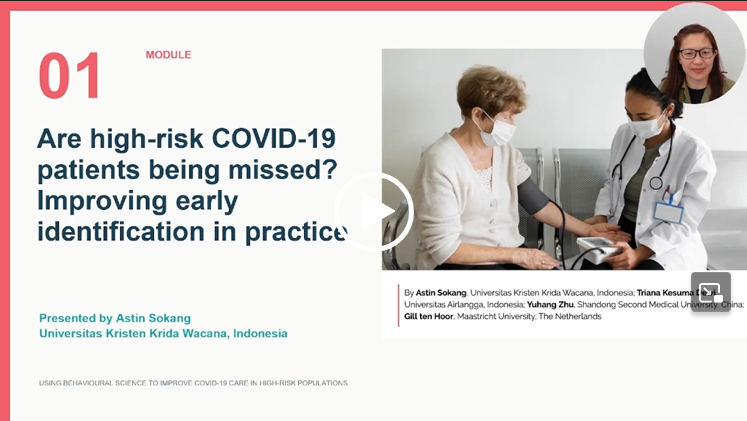

Von Astin Sokang, Universitas Kristen Krida Wacana, Indonesien; Triana Kesuma Dewi, Universitas Airlangga, Indonesien; Yuhang Zhu, Shandong Second Medical University, China; Gill ten Hoor, Maastricht University, Niederlande
Für viele Erwachsene verläuft eine COVID-19-Erkrankung mild und äußert sich beispielsweise durch Müdigkeit, Husten oder leichtes Fieber. Bei Personen mit bestimmten Vorerkrankungen kann die Infektion jedoch zu einem Krankenhausaufenthalt oder schweren Komplikationen führen. Eine frühzeitige Identifikation dieser Patientinnen und Patienten ist daher entscheidend, da therapeutische Maßnahmen besonders wirksam sind, wenn sie zeitnah nach Symptombeginn eingeleitet werden.
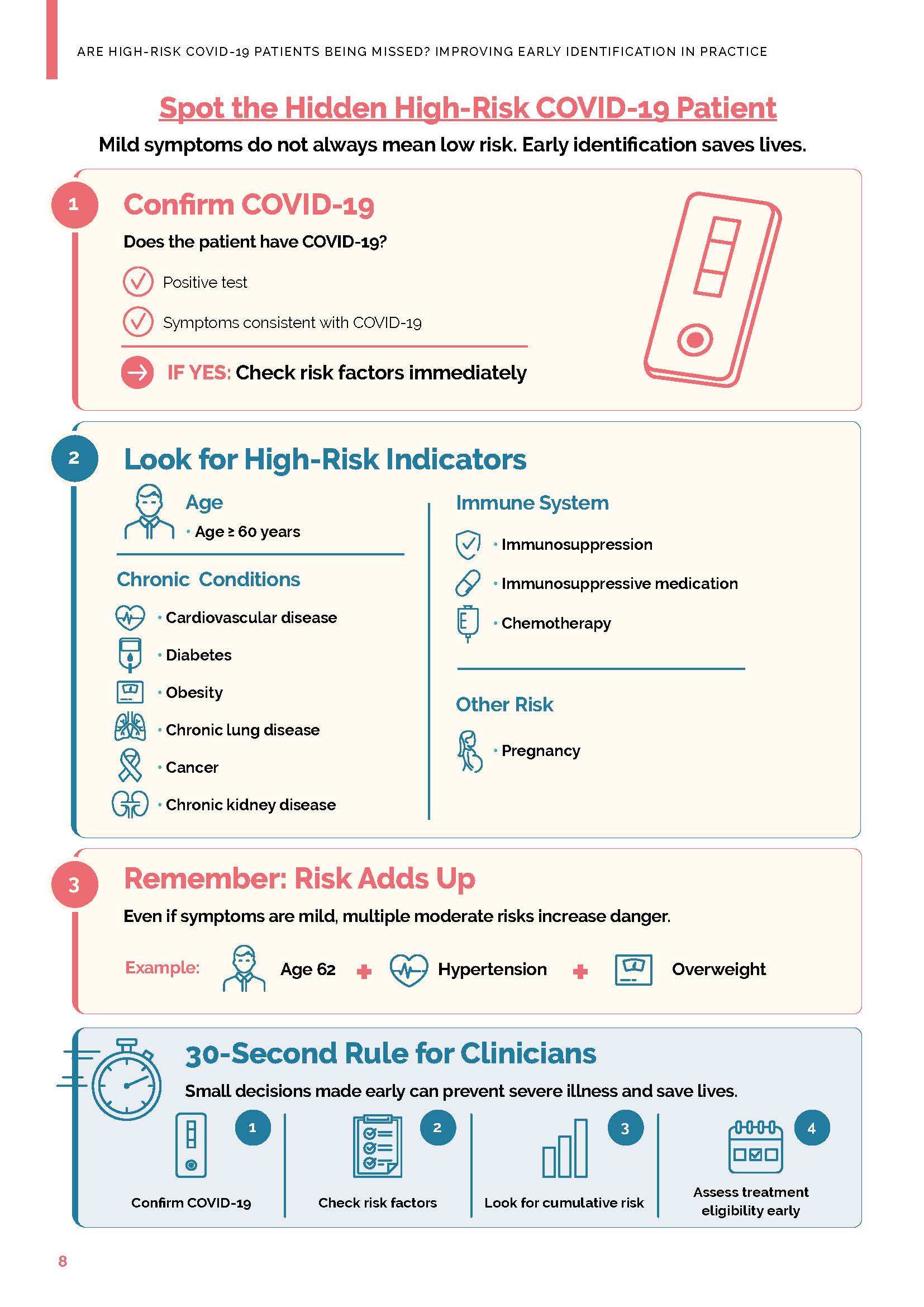
Aktuelle Daten zeigen übereinstimmend, dass das Risiko für einen schweren COVID-19-Verlauf mit zunehmendem Alter sowie bei Vorliegen bestimmter Grunderkrankungen steigt. Dazu zählen insbesondere Herz-Kreislauf-Erkrankungen, Diabetes, Adipositas, chronische Lungenerkrankungen, Krebserkrankungen und Immunsuppression. Besonders gefährdet sind ältere Menschen sowie Personen mit mehreren Vorerkrankungen.
Antivirale Therapien verhindern schwere Verläufe am wirksamsten, wenn sie innerhalb von fünf Tagen nach Symptombeginn begonnen werden. Dennoch bleibt eine schnelle Identifikation von Patientinnen und Patienten mit hohem Risiko wichtig – denn auch ein späterer Behandlungsbeginn kann vulnerablen Gruppen mit länger anhaltender Virusvermehrung noch nutzen.
Warum Hochrisikopatient:innen manchmal übersehen werden
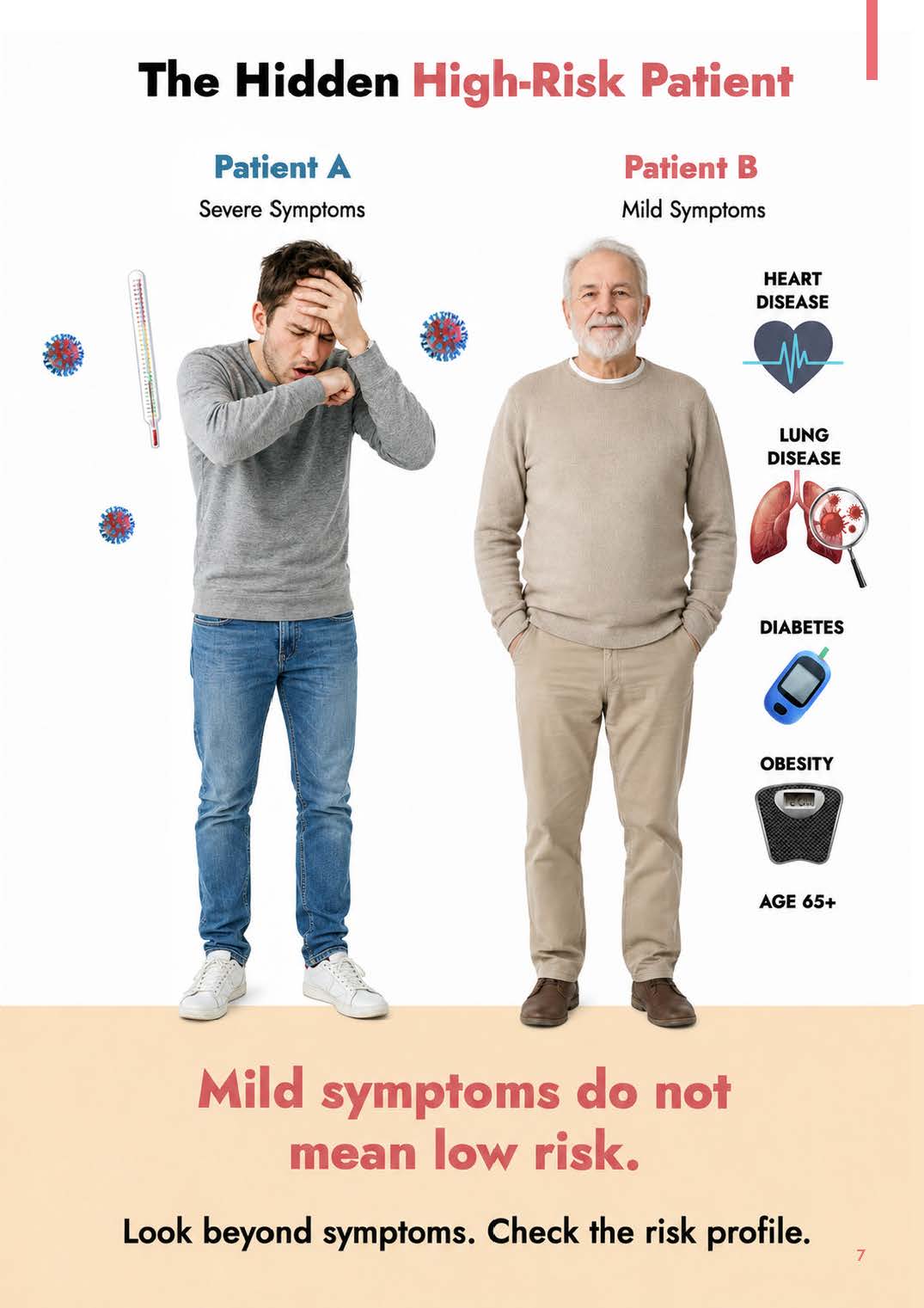
Trotz klarer klinischer Empfehlungen werden geeignete Patientinnen und Patienten nicht immer rechtzeitig erkannt, um frühzeitig behandelt werden zu können. Gesundheitsfachkräfte richten den Blick oft stärker auf die aktuelle Symptomschwere als auf das zugrunde liegende Risiko. Patient:innen, die milde Symptome zeigen, lösen nicht unbedingt eine weitere Abklärung aus – selbst dann nicht, wenn Risikofaktoren vorliegen, die die Wahrscheinlichkeit für Komplikationen erhöhen.
Zudem ergibt sich das Risiko häufig aus mehreren moderaten Faktoren und nicht aus einer einzelnen „klassischen“ Hochrisiko-Erkrankung. Internationale Leitlinien betonen, dass die Anzahl der Vorerkrankungen das Risiko deutlich erhöht. Wichtig ist daher eine Gesamtbewertung des Risikoprofils (z. B. höheres Alter, Bluthochdruck und Übergewicht zusammen), anstatt die einzelnen Diagnosen isoliert zu betrachten.
Auch Zeitdruck im klinischen Alltag spielt eine Rolle. Entscheidungen müssen oft auf Grundlage begrenzter Informationen getroffen werden – etwa bei einer unvollständigen Anamnese oder wenn relevante Risikofaktoren in der (elektronischen) Patientenakte nicht ausreichend hervorgehoben sind. Dadurch besteht die Gefahr, dass wichtige Hinweise übersehen werden, insbesondere wenn Risikofaktoren nicht unmittelbar erkennbar sind.
Auch strukturelle und verhaltensbezogene Barrieren beeinflussen, wer eine rechtzeitige Versorgung erhält. Studien aus der Zeit der COVID-19 Pandemie zeigen, dass ethnische Minderheiten sowie sozioökonomisch benachteiligte Bevölkerungsgruppen höhere Raten an Infektionen, Krankenhausaufenthalten und Todesfällen aufwiesen. Diese Ungleichheiten sind teilweise auf Unterschiede im Zugang zur Gesundheitsversorgung und zu Behandlungen zurückzuführen.
Auch Patientinnen und Patienten zögern mitunter, medizinische Hilfe in Anspruch zu nehmen. Viele schließen aus milden Symptomen auf ein geringes Risiko oder sind sich nicht bewusst, dass Behandlungen am wirksamsten sind, wenn sie frühzeitig beginnen. Ohne klare ärztliche Anleitung können Betroffene zu spät in die Versorgung kommen, sodass eine Therapie weniger wirksam ist.
Hinzu kommt: Die Risikowahrnehmung hat sich im Verlauf der Zeit verändert. Zu Beginn der Pandemie führte ein höheres Risikobewusstsein zu vorsichtigerem Handeln. Wird die Lage hingegen insgesamt als weniger bedrohlich wahrgenommen, erscheinen milde Verläufe weniger dringlich – und die Motivation, Risiken systematisch zu prüfen, kann sowohl bei Patientinnen und Patienten als auch bei Gesundheitsfachkräften sinken.
Wie Verhaltenswissenschaften eine bessere Identifikation unterstützen können
Auf den ersten Blick erscheint die Herausforderung vor allem klinischer Natur. Die Verhaltenswissenschaften bieten jedoch praktische Werkzeuge, die Gesundheitsfachkräfte dabei unterstützen können, Patientinnen und Patienten mit hohem Risiko konsequent zu erkennen.
Gesundheitsfachkräfte arbeiten häufig unter hoher kognitiver Belastung. Entscheidungshilfen wie Erinnerungsimpulse („Prompts“) und kurze Checklisten können helfen, weniger auf Gedächtnis und Intuition angewiesen zu sein und zentrale Risikofaktoren strukturiert zu prüfen.
Auch elektronische Patientenakten – sofern vorhanden – bieten Unterstützung bei der Früherkennung: Automatisierte Hinweise, die z. B. Alter, chronische Erkrankungen oder Immunsuppression markieren, können dazu anstoßen, die Therapie-Eignung rasch zu prüfen.
Eine klare Kommunikation über Risiken und die Bedeutung eines frühen Behandlungsbeginns trägt zur frühzeitigen Identifikation bei. Wenn Patientinnen und Patienten ihr individuelles Risiko verstehen, könnten sie nach einem positiven Testergebnis frühzeitig medizinische Beratung aufsuchen – anstatt abzuwarten, bis sich die Symptome verschlimmern.
Zusätzlich können gezielte Fragen (z. B. „Was könnte es Ihnen erschweren, schnell eine Behandlung zu bekommen?“) oder ein offenes Ansprechen möglicher Zugangsprobleme helfen, versteckte Barrieren aufzudecken. Allgemeine Hinweise wie „Sie sollten überlegen, zum Arzt zu gehen“ sind oft weniger wirksam als konkrete, umsetzbare Vorschläge – etwa: „Sie könnten diese Woche einen Termin bei Ihrer Hausarztpraxis oder einer ambulanten Anlaufstelle vereinbaren. Ich kann Ihnen gerne helfen, schnell etwas Passendes in der Nähe zu finden.“
Aktive Selbst-Reflektion im klinischen Alltag kann außerdem helfen, unbewusste Vorannahmen (implizite Bias) zu reduzieren. Ein einfacher Selbstcheck – z. B. „Würde ich bei einer anderen Person mit demselben klinischen Profil denselben Rat geben oder dieselbe Entscheidung treffen?“ – kann unbeabsichtigte Unterschiede in der Versorgung verschiedener Bevölkerungsgruppen verringern.
Kernaussagen
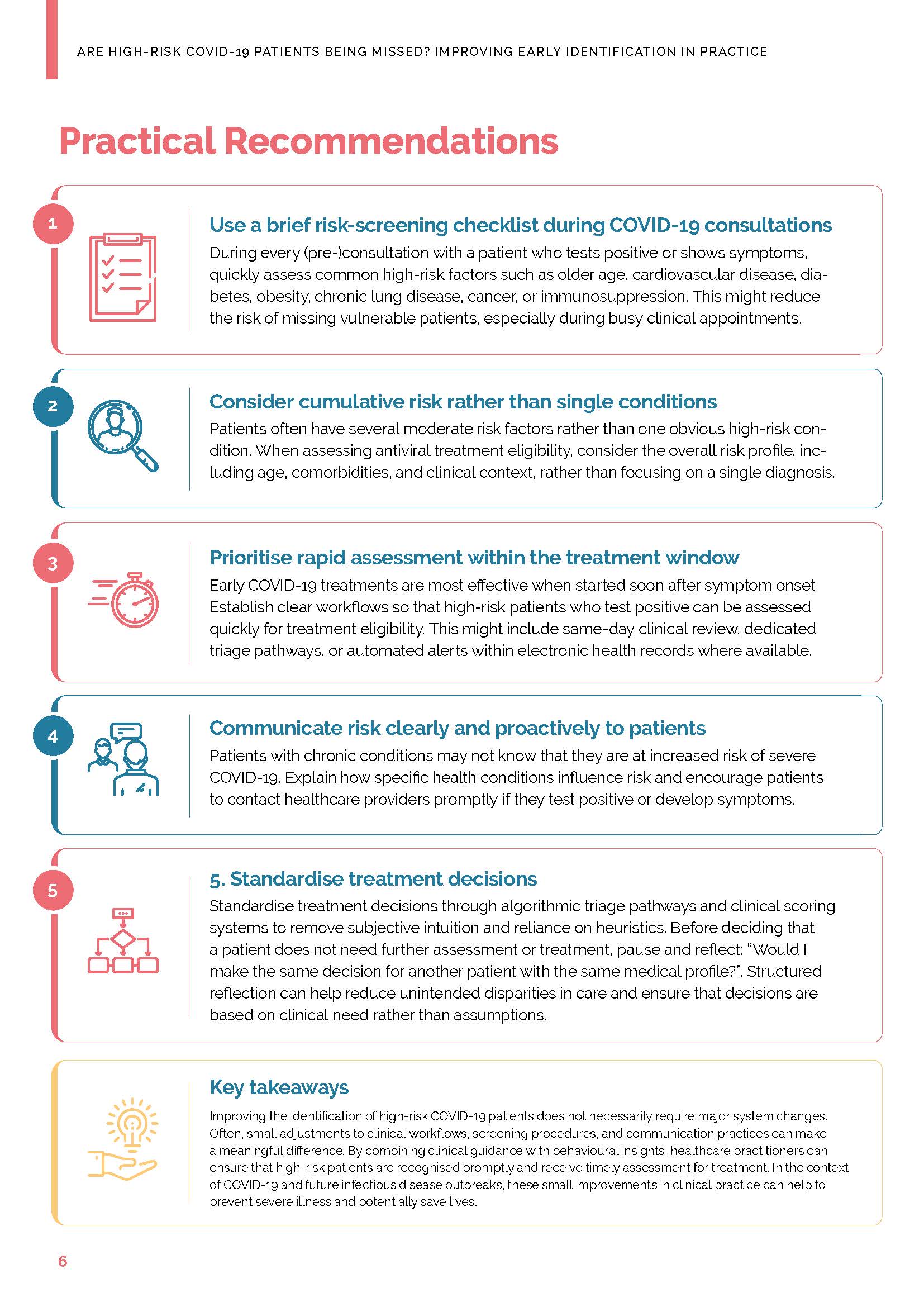
Die bessere Identifikation von COVID-19-Hochrisikopatientinnen und -patienten erfordert nicht zwingend große Systemveränderungen. Oft können schon kleine Anpassungen in Arbeitsabläufen, im Screening und in der Kommunikation einen bedeutenden Unterschied machen. Werden klinische Leitlinien mit verhaltenswissenschaftlichen Erkenntnissen verknüpft, können Behandelnde sicherstellen, dass Hochrisikopatientinnen und ‑patienten schnell erkannt werden und eine Behandlung rechtzeitig eingeleitet wird. Im Kontext der COVID‑19-Pandemie und möglicher zukünftiger Infektionsausbrüche können solche kleinen Optimierungen in der klinischen Praxis helfen, schwere Verläufe zu verhindern und potenziell Leben zu retten.
Empfehlungen für die Praxis
- Nutzen Sie eine kurze Risiko-Checkliste in COVID-19-Konsultationen
Bei jeder (Vor‑)Konsultation mit einer Person mit positivem Test oder typischen Symptomen sollten Sie zügig die häufigsten Risikofaktoren prüfen (z. B. höheres Alter, Herz‑Kreislauf‑Erkrankungen, Diabetes, Adipositas, chronische Lungenerkrankung, Krebs oder Immunsuppression). Das senkt das Risiko, vulnerable Patientinnen und Patienten zu übersehen – besonders in stressigen Sprechstunden. - Berücksichtigen Sie das Gesamtrisiko statt einzelner Diagnosen
Viele Menschen haben mehrere moderate Risikofaktoren statt einer „offensichtlichen“ Hochrisiko-Erkrankung. Wenn Sie die Eignung für eine antivirale Therapie prüfen, bewerten Sie das gesamte Risikoprofil (Alter, Komorbiditäten und klinischer Kontext) und nicht nur eine einzelne Diagnose. - Priorisieren Sie eine rasche Einschätzung innerhalb des Behandlungsfensters
Frühe COVID‑19‑Behandlungen wirken am besten, wenn sie kurz nach Symptombeginn starten. Etablieren Sie klare Abläufe, damit Hochrisikopatientinnen und -patienten nach einem positiven Test schnell auf Therapie-Eignung geprüft werden können – z. B. durch tagesgleiche ärztliche Einschätzung, definierte Triage‑Wege oder (wo möglich) automatische Hinweise in elektronischen Systemen. - Kommunizieren Sie Risiken klar und proaktiv
Menschen mit chronischen Erkrankungen wissen oft nicht, dass sie ein erhöhtes Risiko für schwere COVID‑19‑Verläufe haben. Erklären Sie, wie bestimmte Vorerkrankungen das Risiko beeinflussen, und ermutigen Sie Betroffene, sich bei positivem Test oder Symptomen frühzeitig an die behandelnde Praxis/Anlaufstelle zu wenden. - Standardisieren Sie Therapieentscheidungen
Nutzen Sie standardisierte Triage‑Algorithmen und klinische Scores, um subjektive Intuition und Faustregeln zu reduzieren. Bevor Sie entscheiden, dass keine weitere Abklärung oder Behandlung nötig ist, halten Sie kurz inne: „Würde ich bei einer anderen Person mit demselben medizinischen Profil genauso entscheiden?“ Aktive Selbst-Reflektion kann unbeabsichtigte Ungleichheiten in der Versorgung verringern und sicherstellen, dass Entscheidungen auf klinischem Bedarf statt auf impliziten Annahmen beruhen.
Übersetzung von: Lisa Marie Warner & Julia Große