
By Tracy Epton, University of Manchester, UK, Lisa Marie Warner, MSB Medical School Berlin, Germany, and Aleksandra Lazic, an independent researcher from Belgrade, Serbia
Working with high‑risk patients around COVID‑19 can feel like navigating several conversations at once. There’s the clinical information we need to share, of course, but there’s also everything patients bring with them – beliefs shaped by culture, experiences of healthcare, fears about stigma, mixed messages from social networks, and the pressures of everyday life. Behavioural science can help us untangle these threads and make the whole process smoother, more compassionate, and more effective.
One of the challenges begins right at the moment of diagnosis. Many clinicians worry about delivering sensitive information, especially if they feel pressed for time or unsure how the patient will react. Meanwhile, patients may carry misinformation (“the tests aren’t accurate”, “COVID isn’t serious anymore”), or they may be wary of the healthcare system based on past experiences. Some are afraid of what a diagnosis means for their job, their family, or their community.
When we step into this conversation, we’re walking into a very human space, not just a medical one. People might find conversations about their health difficult – they might feel judged, embarrassed or worried they are making poor health choices. If they feel this way, they may act defensively; for example, they might deny the need for treatment, downplay the severity of COVID-19, or believe that the treatment is ineffective. See Step 1 in the recommendations on how to create a safe space for diagnosis, correct misinformation and decrease the tendency to defensiveness.
Once the diagnosis has landed, the next challenge is motivation. Motivation rarely comes from risk information alone. Many patients with heightened risk, especially those who feel only mildly unwell or have no symptoms at all, may struggle to see why urgent treatment is necessary. Others doubt that antiviral treatments will help, or they worry about side effects. Some do not see themselves as “high‑risk”, or they may hold religious or cultural beliefs about medication that make the decision more complex. However, these concerns can often be addressed using behaviour change techniques (see Step 2).
Even when a patient is fully motivated, they can face hurdles once treatment begins. They might forget to take medication, be confused about the instructions, or have competing responsibilities such as family or work. Simply feeling better after a day or two can also lead to early discontinuation. Adherence is not only about willingness – it’s about how treatment fits into everyday routines. This can be supported through proactive planning (see Step 3).
Supporting high‑risk patients through COVID‑19 diagnosis and treatment works best when behavioural science is combined with cultural sensitivity; the following recommendations should be grounded in both.
Practical recommendations
Step 1: Create a safe, respectful atmosphere when delivering the diagnosis.
Begin by affirming the patient’s strengths or values – this helps reduce defensiveness and builds rapport. One method to decrease the risk of such defensive reactions is the so-called “affirmation” approach, in which patients are briefly encouraged to reflect on their personal strength and valued roles in life, such as being an important person to others – a caring partner, parent, or colleague – instead of focusing on the setback of infection. This may support self-esteem and increase the likelihood of accepting the diagnosis and next steps of treatment. When misinformation arises, correct it calmly by using a “fact sandwich”: share the fact, acknowledge the myth briefly, explain why it’s inaccurate, and return to the fact. Keeping explanations simple and culturally relevant is crucial, especially for patients with limited health literacy or limited language proficiency.
Step 2: Use clear and engaging communication tools to support motivation.
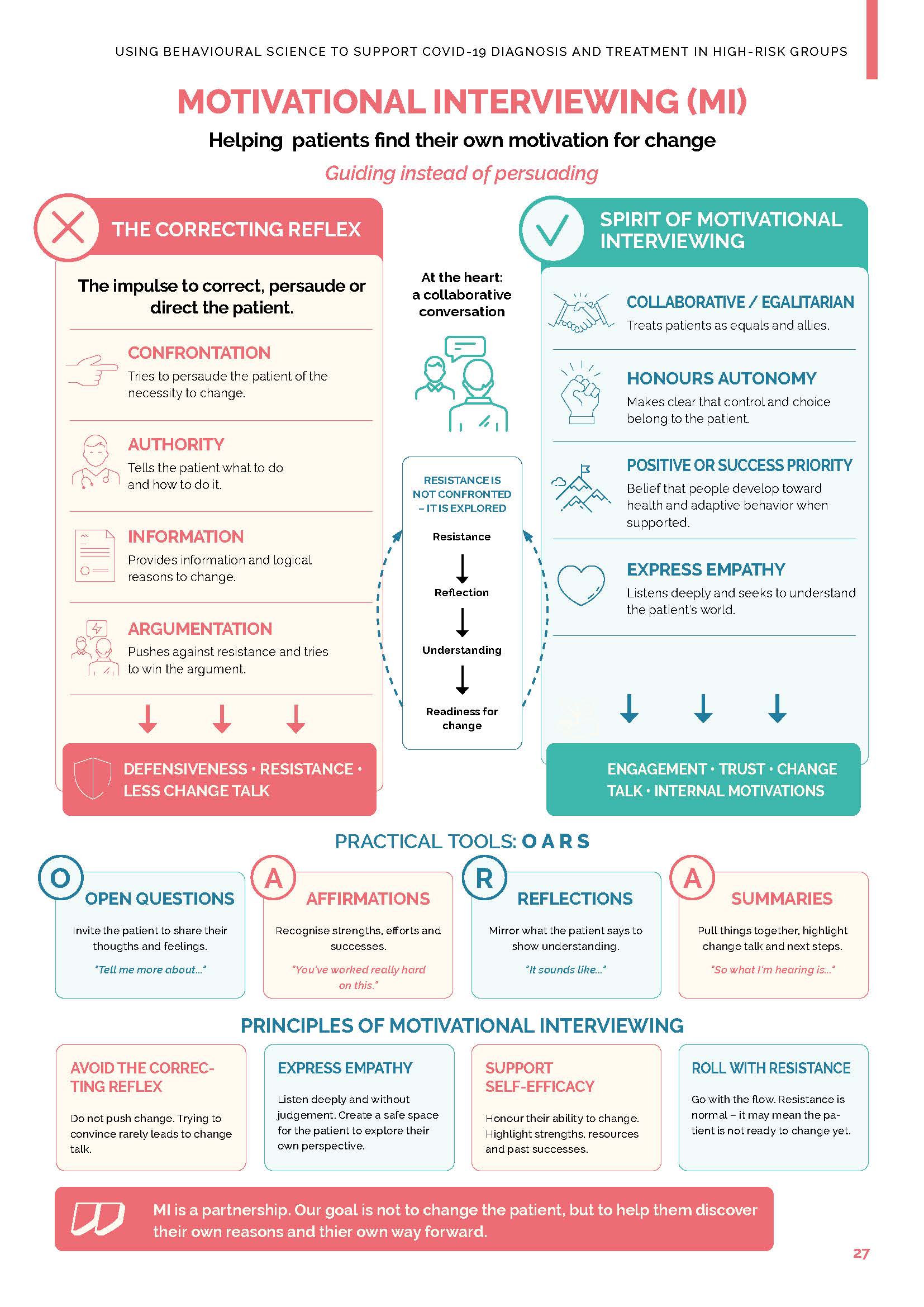
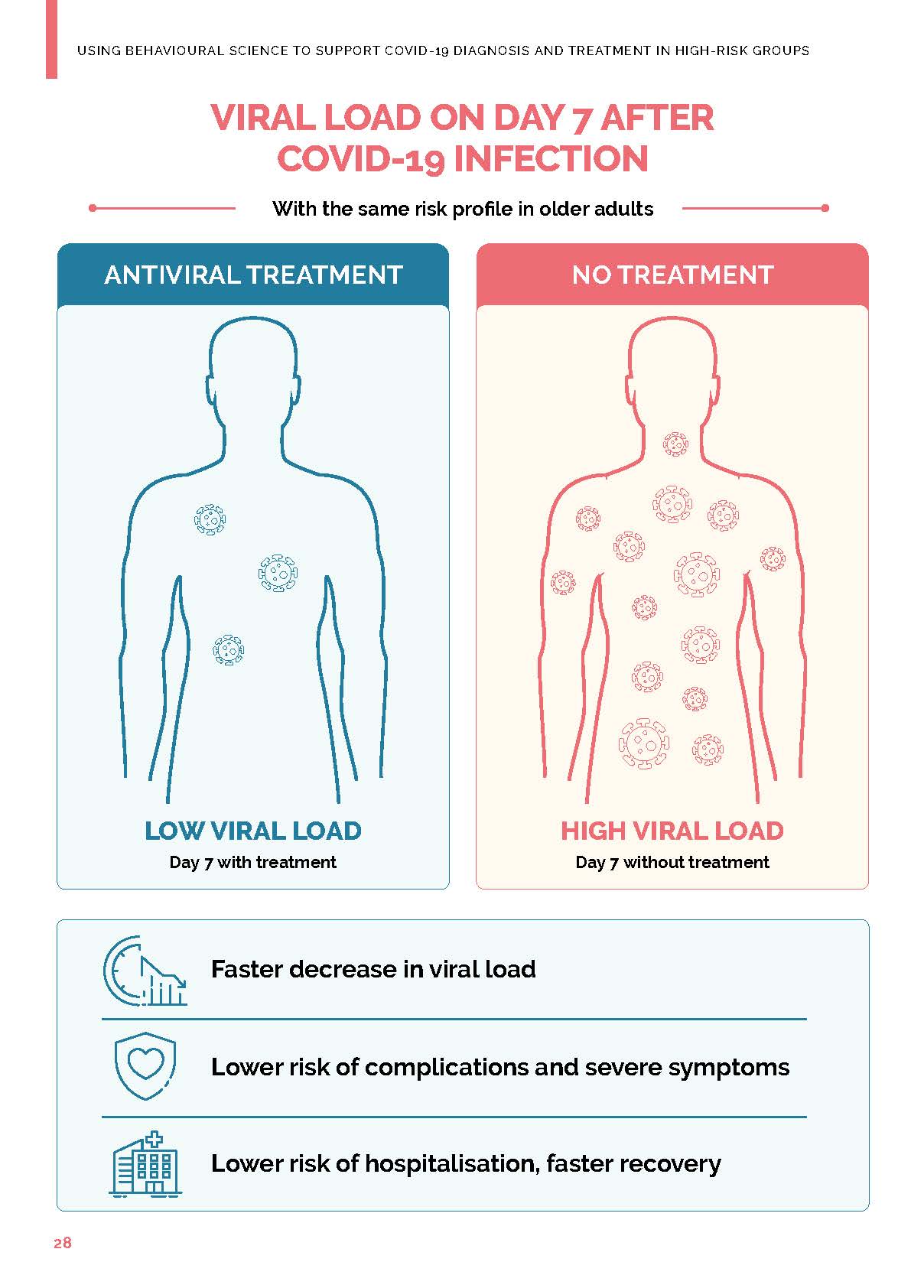
Motivational interviewing techniques – open questions, reflective listening, and affirmations – can support patients in identifying their own reasons for considering treatment, which is far more effective than persuasion alone. Narratives – for example, a short story about another patient’s experience – or visual aids in the form of infographics or illustrations – for example, a simple graphic showing viral load with and without treatment – can help explain why early treatment matters and make the risk of deterioration more tangible and easier to understand. Patients can also be encouraged to weigh their own pros and cons for treatment, considering not only their personal health but how recovery may impact their social environment (e.g., being there for family or maintaining close relationships). Particularly for older adults, the emotionally meaningful and short-term benefits of a treatment (e.g., recovering quickly to see the grandchild) can be more convincing than long term health goals (e.g., avoiding the risks associated with illness accumulation).
Step 3: Support adherence through practical planning.
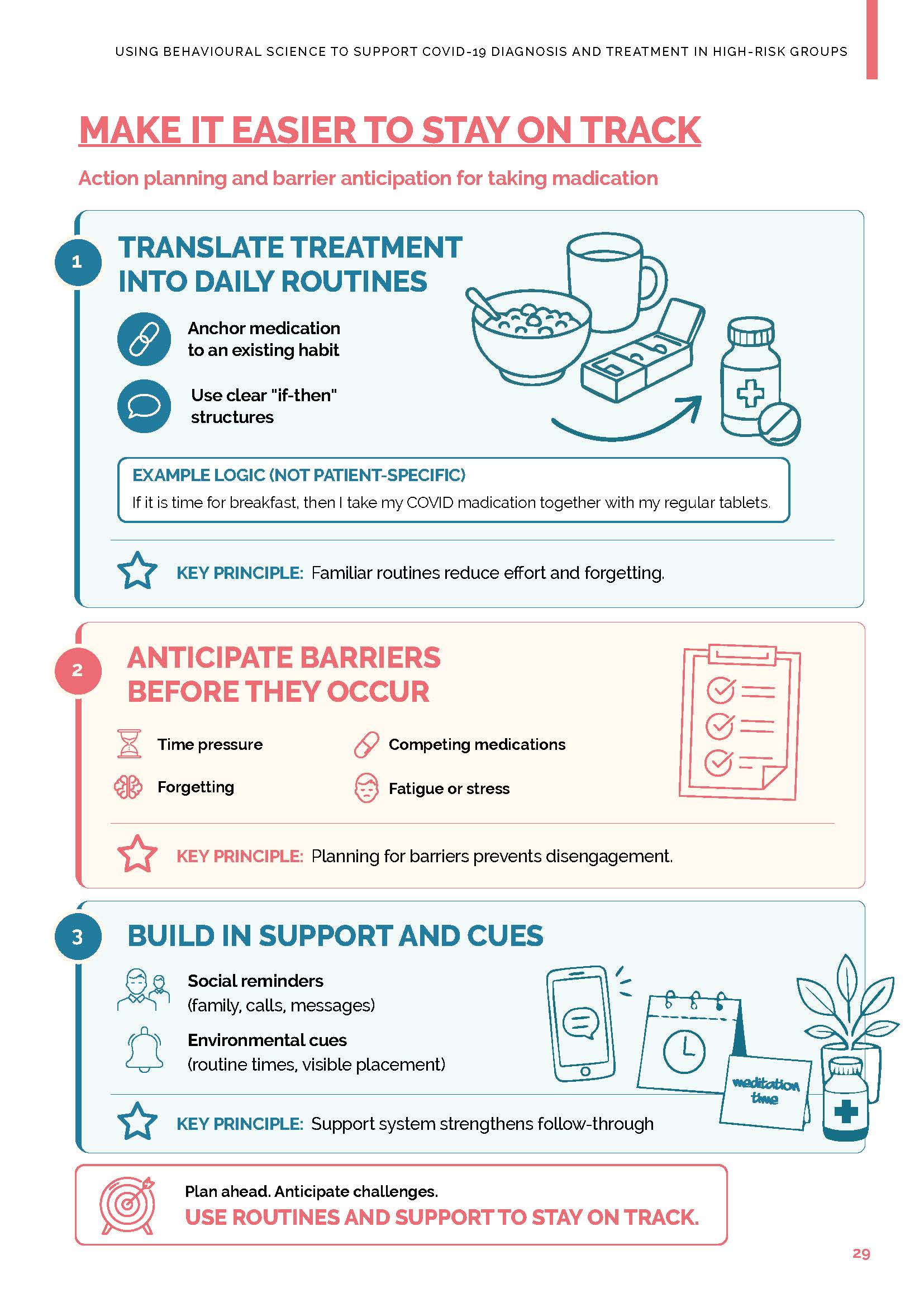
Work with the patient to build a concrete action plan – where medication will be kept, when doses will fit into daily routines, and what cues will prompt them. This makes adherence more manageable and less reliant on memory. Implementation‑intention strategies (“If I’m at work when it’s time for a dose, then I will…”) help maintain treatment even when routines change. Pill organisers, alarms, and visual cues support consistent follow‑through.
You can also help patients problem-solve by identifying potential barriers to taking their medication and potential solutions in advance. Encourage them to seek support from their social network, which may even welcome the opportunity to help.
Above all, culturally responsive care matters at every stage. Asking about beliefs, family roles, or preferred languages helps ensure the plan feels respectful and realistic. By combining rapport‑building, motivational support, and practical planning, healthcare professionals can improve outcomes and reduce disparities for the patients who need it most.