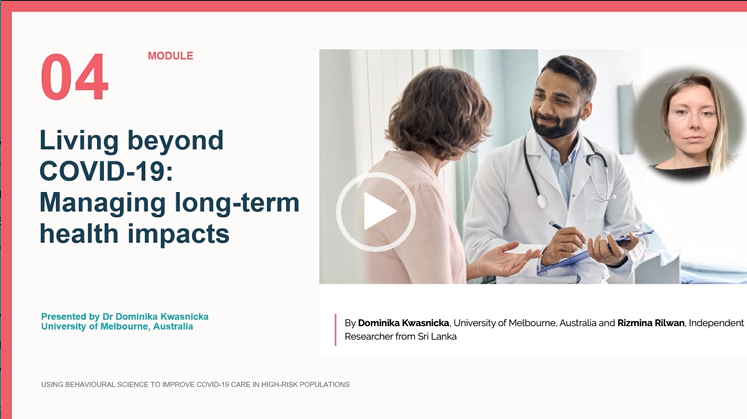

Kirjoittajat: Dominika Kwasnicka (Melbournen yliopisto, Australia) ja Rizmina Rilwan (itsenäinen tutkija, Sri Lanka)
Koronan akuuttivaiheen jälkeen: Mitä opimme edelleen
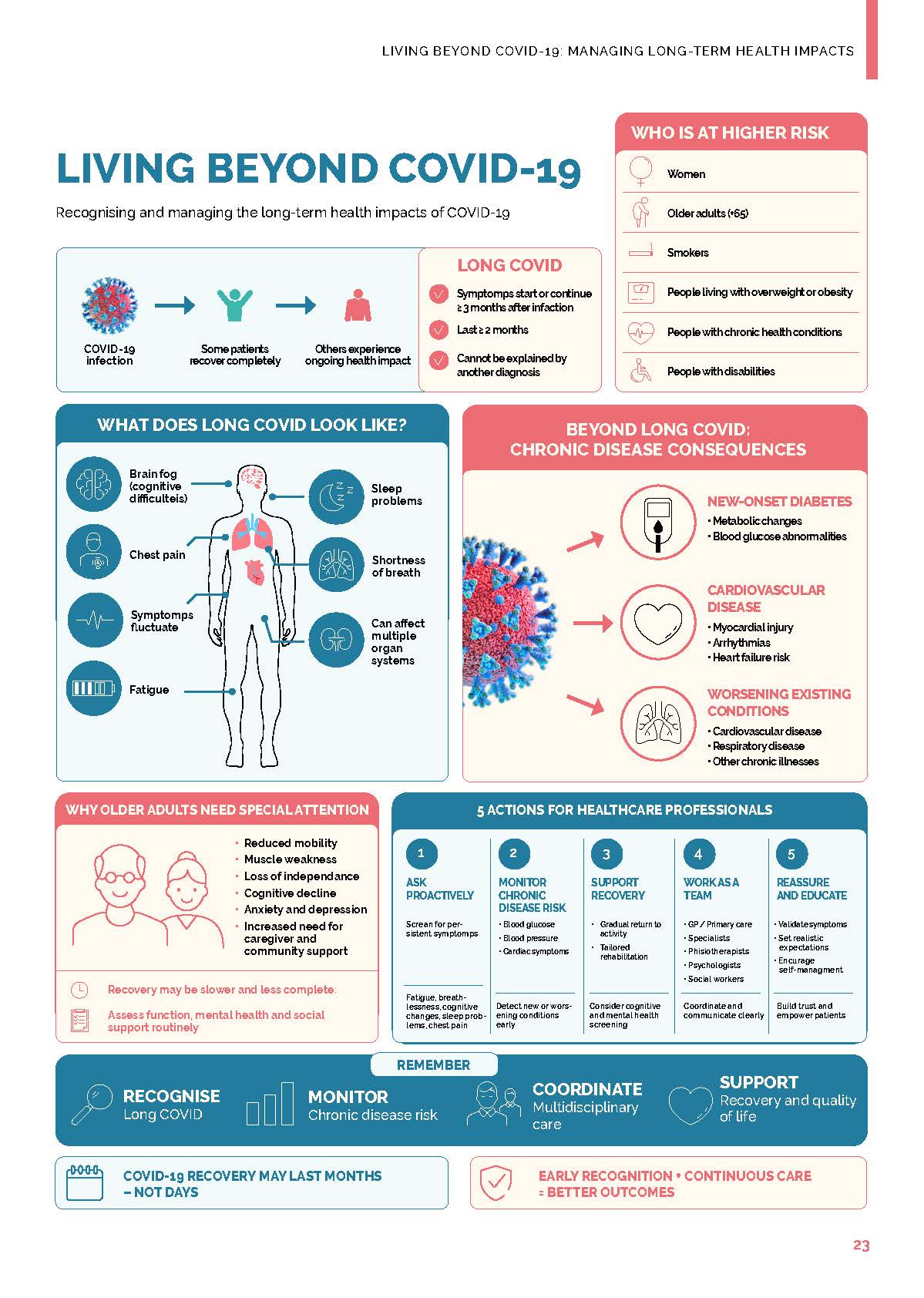
Vaikka maailmanlaajuinen huomio keskittyi koronainfektion akuuttiin vaiheeseen, koronan pitkäaikaiset seuraukset tunnistetaan yhä laajemmin kliinisessä työssä. Maailman terveysjärjestö WHO tunnistaa tietyt väestöryhmät, joilla on korkeampi riski saada pitkäaikaisia koronaoireita (post-COVID-19-oireyhtymä) SARS-CoV-2-tartunnan jälkeen. Näihin ryhmiin kuuluvat naiset, iäkkäät, tupakoijat, ylipainoiset tai liikalihavat ihmiset, henkilöt, joilla on jokin pitkäaikaissairaus, sekä vammaiset henkilöt.
Monet kokevat oireita viikkoja tai kuukausia tartunnan jälkeen, kun taas toisille kehittyy uusia tai pahenevia pitkäaikaissairauksia. Näiden pitkäaikaisvaikutusten ymmärtäminen on välttämätöntä tehokkaan ja potilaskeskeisen hoidon tarjoamiseksi, erityisesti iäkkäille ja niille, joilla on jo riski sairastua pitkäaikaissairauksiin. Terveydenhuollon ammattilaisille tämä tarkoittaa siirtymistä akuuttivaiheen hoidosta jatkuvaan seurantaan, ennaltaehkäisyyn ja koordinoituun hoidon suunnitteluun.
Mitä on pitkäkestoinen korona? Monimutkaisen ja muuttuvan tilan ymmärtäminen
Pitkäkestoinen korona, joka tunnetaan myös nimellä post-COVID-oireyhtymä (tai pitkä korona), määritellään oireiden jatkumisena tai uusien oireiden kehittymisenä kolme kuukautta alkuperäisen SARS-CoV-2-tartunnan jälkeen. Oireiden on kestettävä vähintään kaksi kuukautta ilman muuta selittävää syytä (tämä on Maailman terveysjärjestön määritelmä; eri organisaatioiden määritelmät vaihtelevat hieman). Yleisimpiä oireita ovat uupumus, hengenahdistus, kognitiiviset vaikeudet (”aivosumu”), rintakipu ja unihäiriöt. Nämä oireet voivat vaihdella aalloittain ja ne vaikuttavat usein useisiin eri elimiin. Hoitohenkilökunnan on hyvä huomioida, että oirekuva on usein epäspesifinen ja potilas saattaa tarvita laajan, eri elinjärjestelmät kattavan kokonaisarvion.
Esiintyvyysarviot vaihtelevat, mutta pitkäkestoinen korona näyttää olevan yleisempi iäkkäillä, pitkäaikaissaurauksista kärsivillä sekä niillä, jotka sairastivat alkuperäisen taudin vaikeamuotoisena. Se voi kuitenkin ilmetä myös henkilöillä, joiden infektio oli lievä tai jopa oireeton, mikä tekee siitä laaja-alaisen ja ennalta-arvaamattoman vaivan.
Miten COVID-19 muovaa pitkäaikaissairauksien riskiä
Uusi näyttö osoittaa, että koronainfektioon liittyy pitkäaikaissairauksien kehittymistä tai niiden pahenemista. Esimerkiksi joillekin potilaille kehittyy infektion jälkeen uusi diabetes, mikä voi johtua viruksen vaikutuksista haiman toimintaan tai tulehdukseen liittyvistä aineenvaihdunnan muutoksista. Vastaavasti sydän- ja verisuonikomplikaatioita, kuten sydänlihasvaurioita, rytmihäiriöitä ja suurentunutta sydämen vajaatoiminnan riskiä, on havaittu vielä akuutista taudista toipumisen jälkeen. Kardiometabolisten riskitekijöiden jatkuva seuranta onkin tärkeä osa koronan jälkeistä hoitoa.
Nämä yhteydet korostavat tarvetta nähdä COVID-19 muunakin kuin vain akuuttina hengitystieinfektiona; se on sairaus, jolla on järjestelmällisiä ja pitkäkestoisia terveysvaikutuksia. Potilailla, jotka jo elävät pitkäaikaissairauksien kanssa, korona voi nopeuttaa taudin etenemistä tai vaikeuttaa sen hoitoa.
Iäkkäät koronainfektion jälkeen: Toipuminen, toimintakyvyn lasku ja selviytymiskyky
Koronainfektion akuutit ja pitkäaikaiset vaikutukset ovat kohdistuneet suhteettoman voimakkaasti iäkkäisiin. Yli 65-vuotiaat kokevat nuoria aikuisia todennäköisemmin pitkäkestoisia koronaoireita ja komplikaatioita. Lisäksi korona voi sekä laukaista että pahentaa olemassa olevia pitkäaikaissairauksia, kuten sydän- ja verisuonitauteja, hengitystiesairauksia ja neurodegeneratiivisia (hermostoa rappeuttavia) sairauksia.
Lääketieteellisten komplikaatioiden lisäksi monet kokevat toimintakyvyn laskua, kuten liikkumisen vaikeutumista, lihasheikkoutta ja itsenäisyyden menetystä. Sosiaalinen eristyneisyys sairauden aikana ja sen jälkeen voi entisestään edistää kognitiivista heikentymistä sekä mielenterveysongelmia, kuten masennusta ja ahdistuneisuutta. Elämänlaatu kärsii usein merkittävästi. Näennäisen toipumisen jälkeenkin iäkkäillä potilailla voi olla vaikeuksia palata aiemmalle toimintatasolleen, jolloin vaaditaan lisätukea terveydenhuollon ammattilaisilta, läheisiltä, järjestöiltä ja kunnilta.
Miksi pitkäkestoinen korona vaatii tiimipohjaista ja pitkäjänteistä hoitotapaa
Koska koronan jälkeiset komplikaatiot ovat laaja-alaisia, moniammatillinen hoitotapa on välttämätön. Tähän voi kuulua tuki yleislääkäreiltä, erikoislääkäreiltä (kuten kardiologeilta tai endokrinologeilta), fysioterapeuteilta, psykologeilta ja sosiaalityöntekijöiltä. Säännöllinen seuranta mahdollistaa uusien tai pahenevien vaivojen varhaisen tunnistamisen ja tukee oikea-aikaista hoitoa. Selkeiden hoitopolkujen ja viestintäkanavien luominen palvelujen välille parantaa hoidon jatkuvuutta.
On tärkeää, että hoito on yksilöllistä. Pitkäkestoisesta koronasta kärsivillä potilailla on usein moninaisia ja päällekkäisiä oireita, ja heidän toipumispolkujensa pituus vaihtelee suuresti. Pitkäkestoisen koronan huomioiminen osana pitkäaikaissairauksien hoitosuunnitelmia parantaa hoidon tuloksia ja vähentää lisäkomplikaatioiden riskiä. Tällä integroidulla lähestymistavalla voidaan edistää potilaiden kokonaisterveyttä. Kun päätökset ja tavoitteet asetetaan yhdessä potilaan kanssa, hoito pystytään sovittamaan hänen toiveidensa ja voimavarojensa mukaiseksi.
Tästä eteenpäin: Ymmärryksen, luottamuksen ja jatkuvuuden rakentaminen työssä
Terveydenhuollon ammattilaisilla on keskeinen rooli koronainfektion pitkäaikaisvaikutusten tunnistamisessa ja hoitamisessa. Ymmärryksen lisääminen potilaiden keskuudessa, heidän oireidensa todesta ottaminen (validointi) ja selkeän ohjeistuksen antaminen voivat vähentää epävarmuutta ja parantaa sitoutumista hoitoon. Luottamuksen rakentaminen keskustelemalla pitkäkestoisesta koronasta potilaiden kanssa on tärkeä osa kliinistä työtä.
Tiedon ja tutkimuksen tarkentuessa on tärkeää pysyä ajan tasalla ja joustavana. Koronan pitkäaikaisvaikutukset säilyvät todennäköisesti yksilöiden taakkana pitkään, mikä tekee siitä kriittisen osan pitkäaikaissairauksien hoitoa vuosiksi eteenpäin. Jatkuva ammatillinen koulutus (mukaan lukien tämä koulutus) ja uuden tutkimusnäytön integroiminen käytäntöön ovat välttämättömiä potilaiden hoidon optimoimiseksi.
Käytännön suosituksia
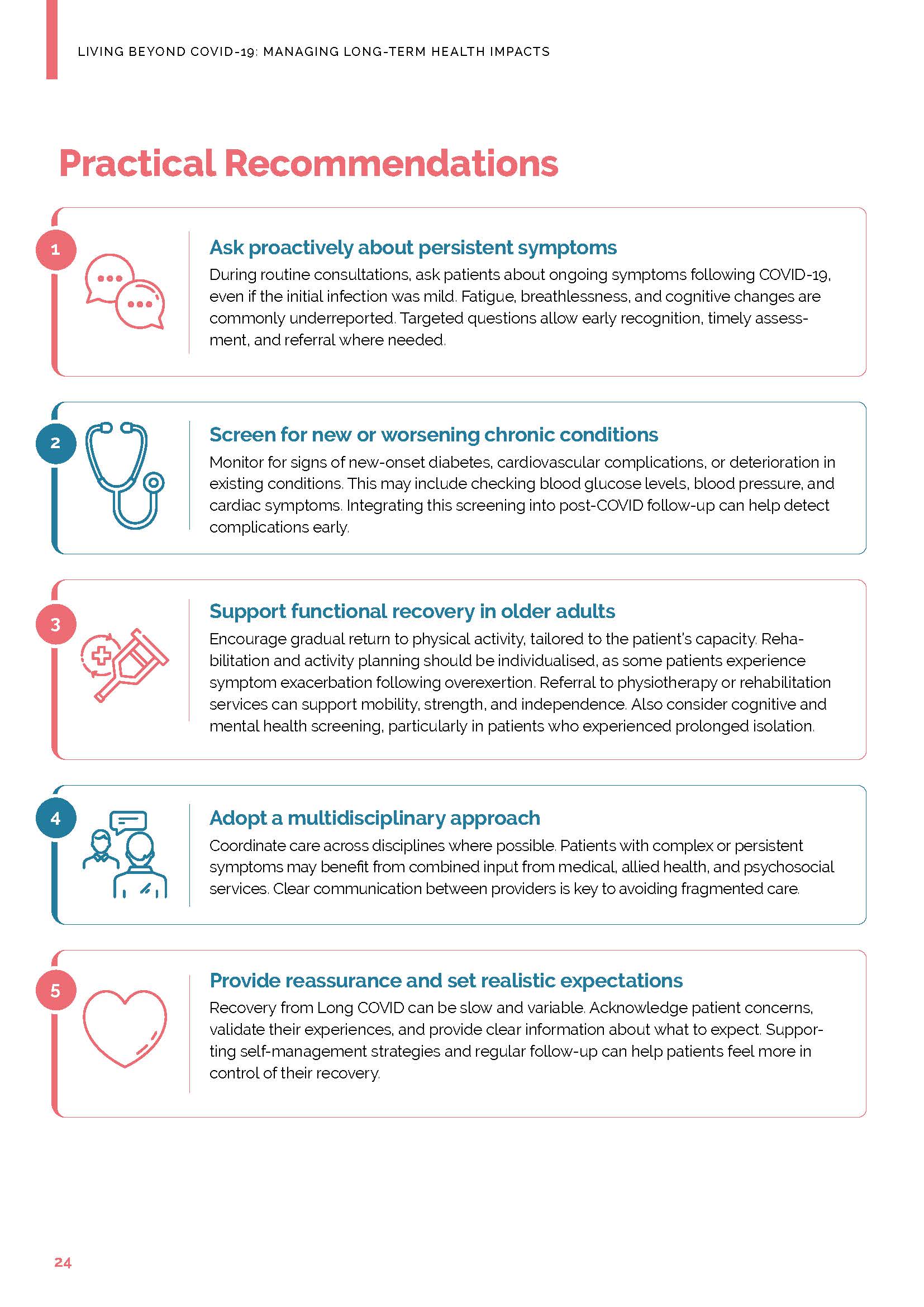
- Kysy aktiivisesti pitkittyneistä oireista:
Kysy potilailta rutiinivastaanotoilla mahdollisista koronan jälkeen jatkuvista oireista , vaikka itse perustauti olisi ollut lievä. Uupumuksesta, hengenahdistuksesta ja kognitiivisista muutoksista jätetään usein kertomatta. Kohdistetut kysymykset auttavat havaitsemaan oireet ajoissa, tekemään oikea-aikaisen arvioinnin ja ohjaamaan potilaan tarvittaessa jatkohoitoon.
- Tutki, onko potilaalle kehittynyt uusia sairauksia tai ovatko olemassaolevat pitkäaikaissairaudet pahentuneet:
Tarkkaile merkkejä uuden diabeteksen puhkeamisesta, sydänkomplikaatioista tai olemassa olevien sairauksien pahenemisesta. Tämä voi tarkoittaa verensokerin ja verenpaineen mittaamista sekä sydänoireiden selvittämistä. Kun otat tämän seulonnan osaksi koronan jälkiseurantaa, autat havaitsemaan komplikaatiot mahdollisimman varhaisessa vaiheessa.
- Tue iäkkäiden toimintakyvyn palautumista:
Kannusta palaamaan fyysisen aktiivisuuden pariin asteittain ja potilaan omien voimavarojen mukaan. Kuntoutuksen ja arjen toiminnan suunnittelun tulee olla yksilöllistä, sillä joillakin potilailla liiallinen rasitus pahentaa oireita. Lähete fysioterapiaan tai muihin kuntoutuspalveluihin tukee liikkumista, voiman palautumista ja itsenäistä selviytymistä. Kartoita myös kognitiivinen toimintakyky ja mielenterveys erityisesti niiltä potilailta, jotka ovat joutuneet olemaan pitkään eristyksissä.
- Käytä moniammatillista lähestymistapaa:
Koordinoi hoitoa eri ammattiryhmien välillä aina kun mahdollista. Jos potilaalla on monimutkaisia tai pitkittyneitä oireita, hän hyötyy siitä, että lääketieteelliset, muut terveydenhuollon palvelut ja psykososiaaliset palvelut tekevät yhteistyötä. Selkeä viestintä eri työntekijöiden ja yksiköiden välillä on avainasemassa, jotta hoito ei pirstoudu.
- Tarjoa tukea ja aseta realistiset odotukset:
Koronan pitkäaikaisvaikutuksista toipuminen voi viedä aikaa, ja oireet voivat vaihdella paljon. Huomioi potilaan huolet, ota hänen kokemuksensa todesta ja anna selkeää tietoa siitä, mitä on odotettavissa. Kun tuet potilaan omahoitomenetelmiä ja järjestät säännöllisen seurannan, autat häntä tuntemaan, että toipuminen on paremmin hänen omissa käsissään.
Kääntänyt: Johanna Nurmi