
By David Simons, Pennsylvania State University; Ayşegül Bakır, Hacettepe University, Türkiye; Johanna Nurmi, University of Helsinki, Finland
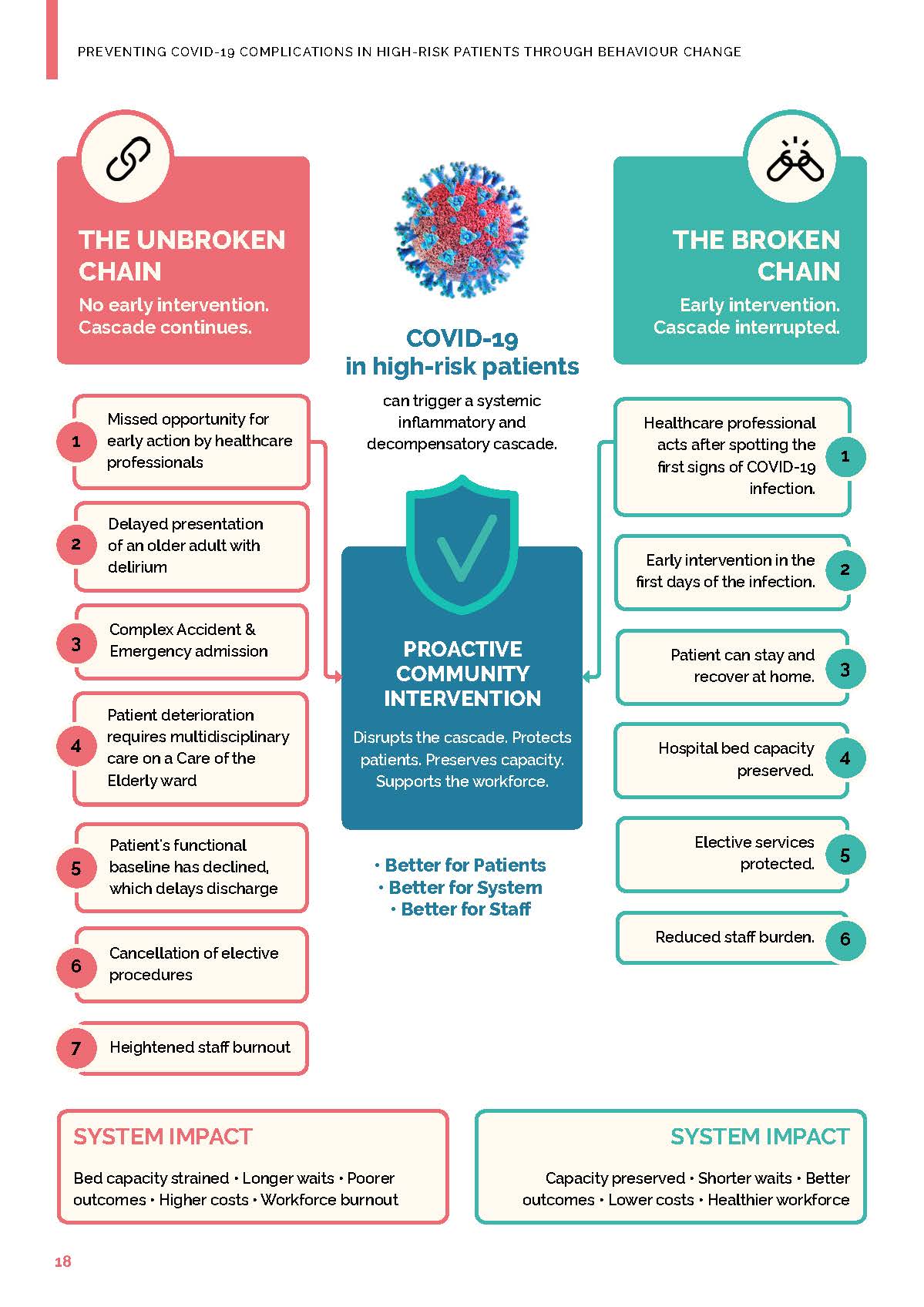
Typically, COVID-19 is described in the past tense and solely as a respiratory infection. But COVID-19 remains an acute systemic stressor of health, particularly for high-risk patients with pre-existing cardiovascular, metabolic, immune or respiratory comorbidities. It is not just the virus that poses a threat; it is the cascade of physiological decompensation it may trigger.
As healthcare professionals, we know the clinical trajectory. A patient with chronic obstructive pulmonary disease (COPD) or interstitial lung disease faces a drastically heightened risk of Acute Respiratory Distress Syndrome (ARDS). This vulnerability is compounded by metabolic conditions; in patients with poorly controlled diabetes or severe obesity, chronic low-grade inflammation and baseline endothelial dysfunction prime the body for a hyperinflammatory response. Consequently, the systemic inflammation induced by COVID-19 can easily precipitate decompensated heart failure, widespread microvascular thrombosis, or acute kidney injury.
In immunocompromised individuals, the dysregulated immune response and prolonged viral shedding create a high-risk environment for superadded bacterial infections, rapidly compounding the clinical severity. Furthermore, we see increased rates of neurological complications, including acute encephalopathy and delirium. These are particularly devastating in older adults, as they frequently cause a sudden, severe decline in Activities of Daily Living (ADLs), impacting patient independence and triggering the need for urgent hospitalisation and prolonged intensive care.
The burden of these complications extends far beyond the individual patient. When an older adult loses their functional baseline due to delirium, or an immunocompromised patient develops a secondary bacterial pneumonia, they do not just require a brief admission. They require complex, intensive emergency interventions, multidisciplinary management, and often extended rehabilitation. This creates a ripple effect across the healthcare system. Intensive care units and care-of-the-elderly wards reach capacity, elective procedures are cancelled, and care continuity for other chronic diseases is fractured.
Furthermore, the sustained pressure of managing these preventable exacerbations and navigating the complex discharge pathways for patients who have abruptly lost their independence may contribute to staff burnout and moral injury among healthcare workers. Moral injury refers to the profound sense of entrapment that arises when people act in ways that conflict with their ethical or professional values. Burnout, on the other hand, is the convergence of work-related stressors with emotional exhaustion, doubts about our competence and productivity, and interpersonal distancing behaviours. Both moral injury and burnout may increase the anxiety, depression, and somatic symptom levels, and exert a direct impact on patient safety, intention to leave the profession, and the overall quality of healthcare.
The behavioural bridge
The gap between a mild initial infection and a hospital admission is often behavioural. Why do high-risk patients delay seeking care, or decline early antiviral and immunomodulatory treatments when they are most effective?
Psychological research indicates that patients frequently misjudge their risk during the early phases of illness. An immunosuppressed patient might experience a mild cough and assume they have a standard upper respiratory tract infection, failing to recognise the rapidly narrowing window to prevent further complications. Similarly, an older adult in the early stages of delirium cannot accurately assess their own clinical decline or advocate for their care.
Besides, cognitive and emotional biases in risk perception can also lead to delay. For example, a patient with congestive heart failure may normalise pain caused by COVID-19 because they are accustomed to their existing chronic chest pain. They may deny the risk because they are overwhelmed to cope with a new threat, or they may display an optimism bias, particularly when symptoms are mild in the early stages, and fail to recognise that they are in a high-risk group.
Treatment hesitancy remains common, patients may distrust new medications, minimise their symptoms to avoid being a “burden,” or feel overwhelmed by the prospect of navigating complex healthcare pathways.
Clinical knowledge alone cannot bridge this gap. If we are to reduce avoidable hospital admissions and protect both our patients and maintain the capacity of healthcare services, we must seamlessly integrate behavioural science into our routine consultations. We need to shift our focus from passively providing medical information to actively facilitating patient and caregiver behaviour change.
By employing specific Behaviour Change Techniques (BCTs), high-risk patients and their support networks can be empowered to act before complications become severe. This proactive approach transforms the patient and their carers from passive recipients of care into active participants in their own health surveillance, ultimately protecting systemic capacity.
Practical recommendations
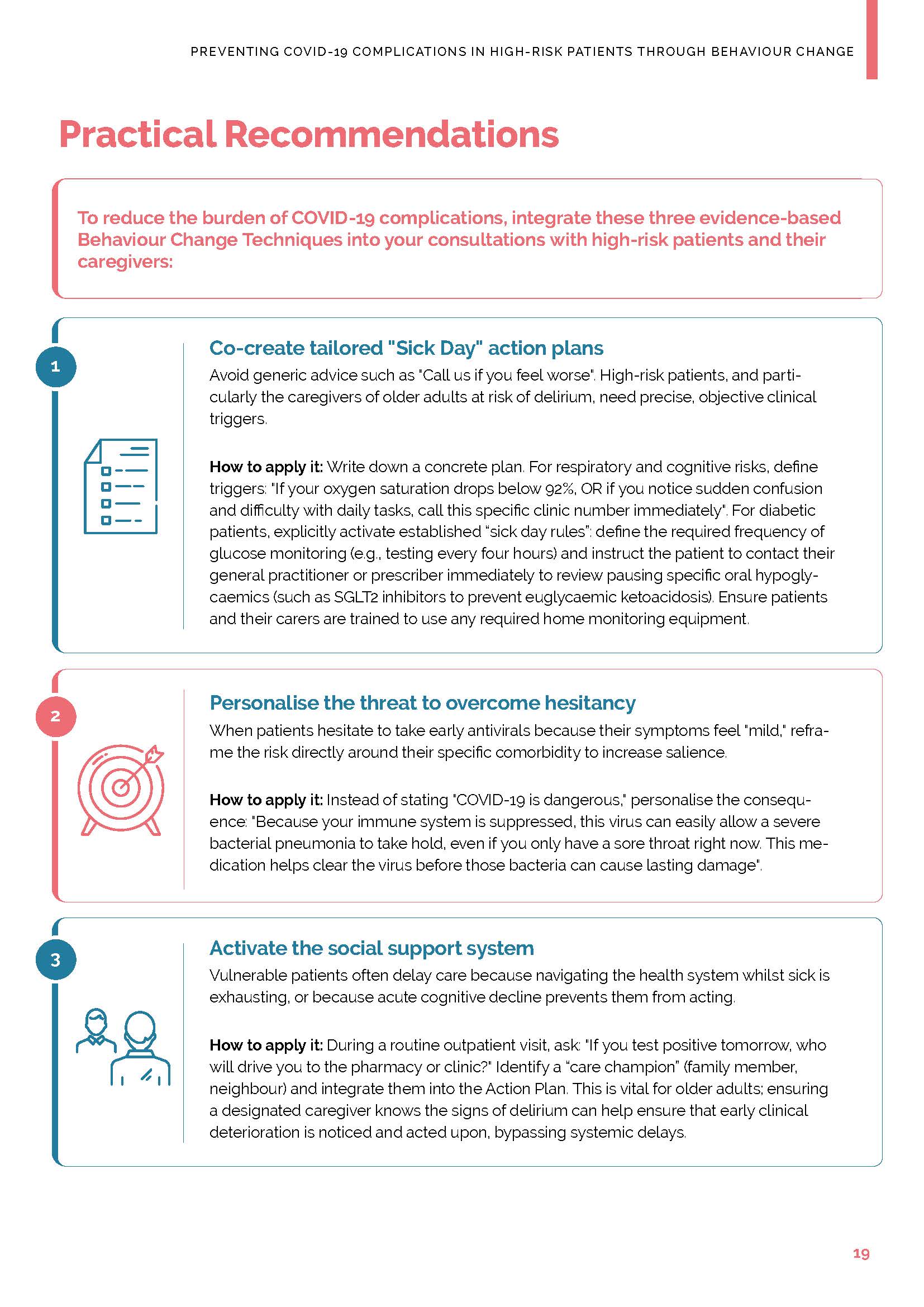
To reduce the burden of COVID-19 complications, integrate these three evidence-based Behaviour Change Techniques into your consultations with high-risk patients and their caregivers:
- Co-create tailored “Sick Day” action plans
Avoid generic advice such as “Call us if you feel worse”. High-risk patients, and particularly the caregivers of older adults at risk of delirium, need precise, objective clinical triggers.
How to apply it: Write down a concrete plan. For respiratory and cognitive risks, define triggers: “If your oxygen saturation drops below 92%, OR if you notice sudden confusion and difficulty with daily tasks, call this specific clinic number immediately”. For diabetic patients, explicitly activate established “sick day rules”: define the required frequency of glucose monitoring (e.g., testing every four hours) and instruct the patient to contact their general practitioner or prescriber immediately to review pausing specific oral hypoglycaemics (such as SGLT2 inhibitors to prevent euglycaemic ketoacidosis). Ensure patients and their carers are trained to use any required home monitoring equipment.
- Personalise the threat to overcome hesitancy
When patients hesitate to take early antivirals because their symptoms feel “mild,” reframe the risk directly around their specific comorbidity to increase salience.
How to apply it: Instead of stating “COVID-19 is dangerous,” personalise the consequence: “Because your immune system is suppressed, this virus can easily allow a severe bacterial pneumonia to take hold, even if you only have a sore throat right now. This medication helps clear the virus before those bacteria can cause lasting damage”.
- Activate the social support system
Vulnerable patients often delay care because navigating the health system whilst sick is exhausting, or because acute cognitive decline prevents them from acting.
How to apply it: During a routine outpatient visit, ask: “If you test positive tomorrow, who will drive you to the pharmacy or clinic?” Identify a “care champion” (family member, neighbour) and integrate them into the Action Plan. This is vital for older adults; ensuring a designated caregiver knows the signs of delirium can help ensure that early clinical deterioration is noticed and acted upon, bypassing systemic delays.