
By İrem Berna Güvenç Erdoğan, Middle East Technical University, Turkey; Iga Palacz-Poborczyk, SWPS University, Poland; Olga Perski, Stockholm University, Sweden; Sheson Tiwari, Psyfolks Education, India; Belgin Ünal, University of Michigan, USA
COVID-19 progression and importance of early treatment provision
Most people recover from COVID-19 without needing intensive medical treatment. Supportive care and symptomatic treatment are usually sufficient. However, a subset of the population, particularly older adults, unvaccinated individuals and those with existing chronic conditions, are at a higher risk of severe illness. Therefore, the World Health Organization emphasizes the importance of early treatment in such high-risk groups to prevent hospitalisation, intensive care, or death.
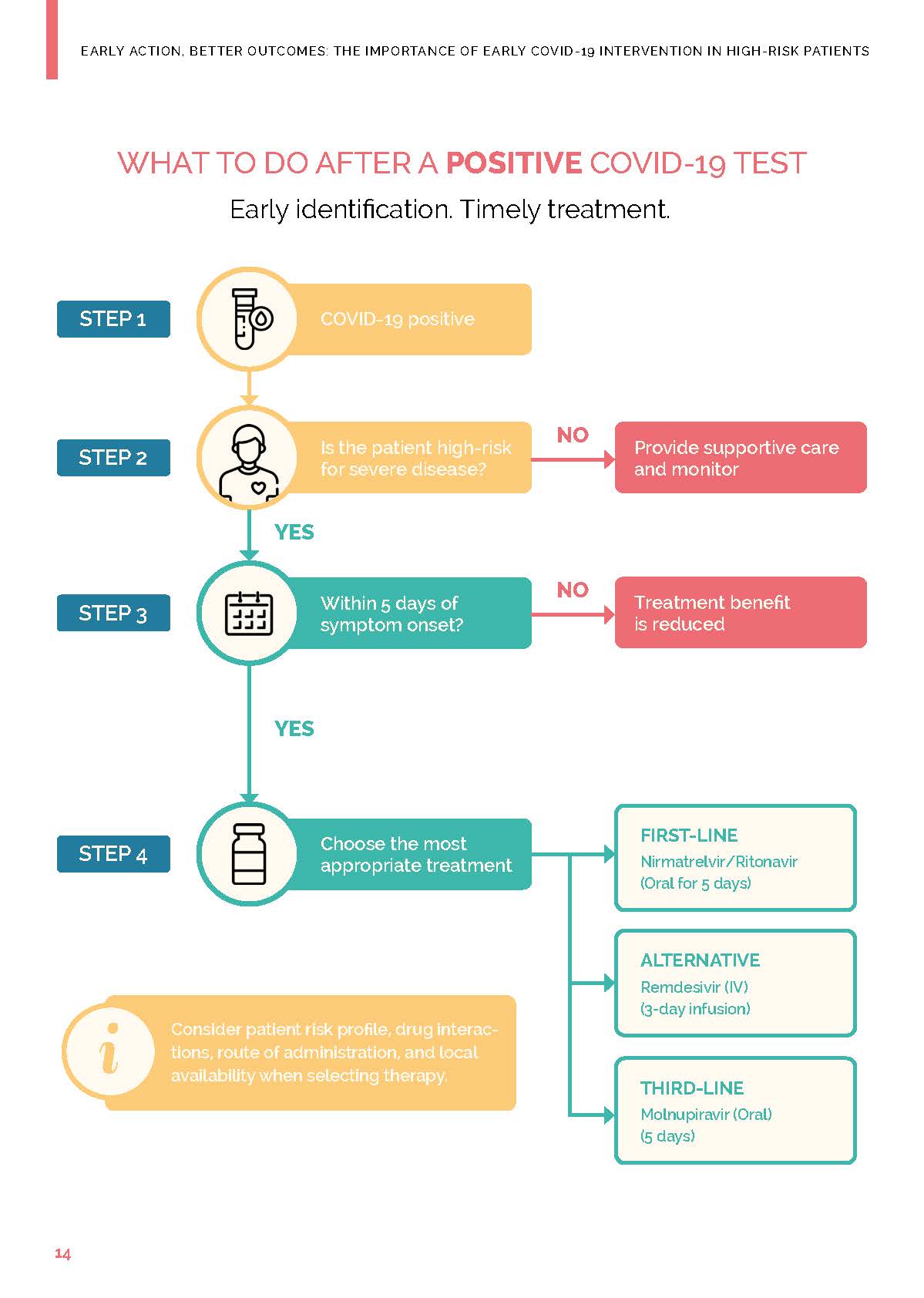
For certain patients, antiviral treatment is recommended to substantially reduce the risk of critical illness, which is most effective within the first 5 days of symptom onset. Delays in testing, diagnosis, or treatment can substantially reduce the effectiveness of available therapies. Ensuring rapid healthcare access, particularly in community settings, is therefore essential for maximising treatment benefits and improving patient outcomes.
Context-specific evidence supporting early treatment to reduce hospitalisation and death
Early treatment substantially reduces the risk of hospitalisation and death, particularly among patients at high-risk of severe disease. To understand the clinical urgency, we must interpret the evidence within its specific clinical and population context. In a large randomized clinical trial conducted across multiple countries, including sites in the US, Brazil, South Africa, India, and Mexico, non-hospitalised high-risk, unvaccinated adults who received antiviral treatment within the first 3 days of symptoms were nearly 89% less likely to be hospitalised or die compared to placebo.
Similarly, early treatment with Sotrovimab, a targeted antibody therapy, reduced the risk of disease progression by 85% (during early circulating variants; effectiveness varied with later variants), reinforcing the importance of early intervention for high-risk individuals, including the elderly and those with underlying conditions like obesity or diabetes. Notably, over 60% of the sample were from Hispanic and Latinx communities, groups disproportionately affected by the pandemic, suggesting the effectiveness of early treatment across socio-demographic contexts.
Likewise, a systematic review of 18 real-world studies across multiple countries found that early treatment significantly reduced hospitalisation and mortality, and that the benefit was greatest when treatment was started within five days of symptoms. A large study from Hong Kong tracking over 87,000 patients found that starting treatment within the first 1-2 days of symptoms significantly reduced hospitalisation and mortality compared to starting it later. Moreover, this pattern was generally consistent across demographic and clinical subgroups, including age, sex, and vaccination status. Taken together, the evidence supports a simple but critical conclusion: early treatment works, and delays reduce its effectiveness.
Overview of recommended therapies aligned with local clinical recommendations
Knowing that the treatment timing is critical, which treatments are actually available, and who should receive them?
For non-hospitalised adults with mild to moderate COVID-19, antiviral therapy is most effective. There are currently three main antiviral agents commonly used in the treatment of COVID-19: Remdesivir, Nirmatrelvir/Ritonavir, and Molnupiravir. The right choice depends on the individual patient’s risk profile, current medications, routes of administration, and local availability.
Remdesivir is administered as a three-day intravenous infusion and is preferred when oral therapy is not appropriate. In a randomized control trial, a three-day outpatient course of Remdesivir significantly reduced hospitalisation and death compared to placebo. Remdesivir is recommended for hospitalised COVID-19 patients, alongside immunomodulators when oxygen support is needed, and as a second treatment option for high-risk outpatients when Nirmatrelvir/Ritonavir is not suitable.
Nirmatrelvir/Ritonavir (Paxlovid) is taken orally for typically five days, and has been shown to significantly reduce the risk of hospitalisations and death in high-risk, unvaccinated individuals. WHO recommends Nirmatrelvir/Ritonavir as first-line treatment for high-risk, non-hospitalised patients.
Finally, Molnupiravir is also taken orally and considered a third-line option, recommended for patients who cannot access or tolerate either of the above. A randomized control trial showed benefits with significant reduction in hospitalisation and death in unvaccinated adults, though the evidence in vaccinated populations was less consistent, suggesting more modest effects.
Availability of therapies may vary across healthcare systems and resource setting. Across all three agents, the timing is critical, as all have been shown to be more effective earlier in the disease. Delaying testing, diagnosis, or the prescribing decision directly reduces the chance of seeing a benefit.
Patient communication strategies to overcome treatment hesitancy
Why does treatment hesitancy persist, even when the clinical case and benefits of treatment are clear?
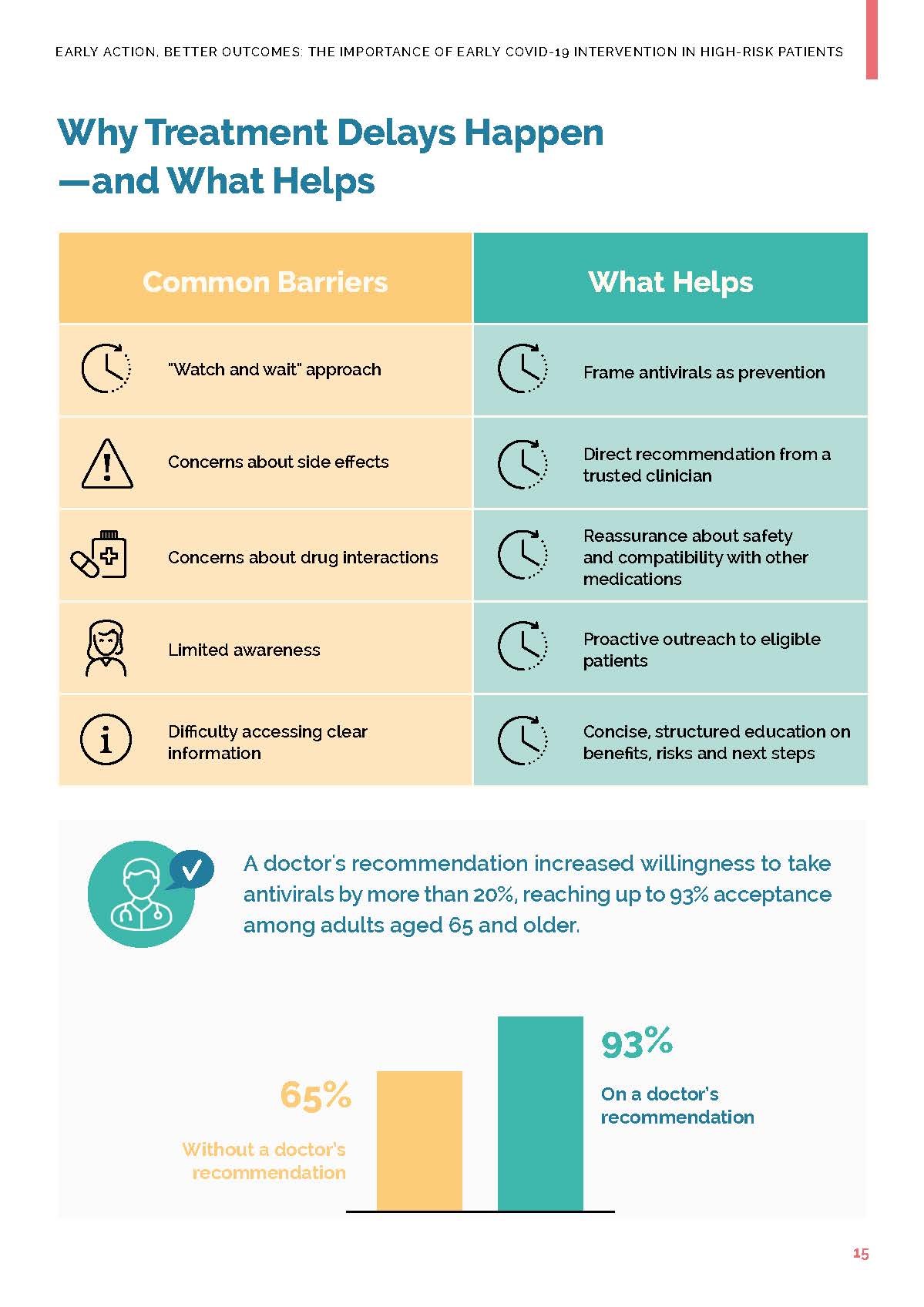
Several factors contribute to delayed decision-making. A common barrier is the “watch and wait” approach, where patients underestimate the severity of COVID-19 and postpone treatment. Concerns about side effects and potential drug interactions are also frequent, particularly among patients managing multiple medications.
In addition, limited awareness and difficulty accessing clear information can further delay timely action, with studies suggesting that only 54% of adults having heard of treatments like Paxlovid (Nirmatrelvir/Ritonavir) prior to diagnosis. Together, these factors create uncertainty, leading patients to hesitate or defer treatment.
What can be done differently in practice?
First, emphasise that COVID-19 treatments are time-sensitive preventive interventions, not just symptom relief. Frame antivirals as a strategy to prevent severe disease, rather than just a treatment, so patients understand that early treatment reduces the risk of severe illness and hospitalisation.
Second, a direct recommendation from a trusted healthcare provider is critical. Patients are far more likely to accept treatment when it is clearly advised by a familiar clinician, with reassurance about safety and compatibility with existing medications. Data shows the proportion of people willing to take antivirals increases by more than 20% if recommended by their doctor, reaching up to 93% acceptance among adults aged 65 and older.
Finally, proactive outreach and standardised education are essential. Patients rarely request treatment independently, as studies indicate that fewer than 20% of eligible patients are both sufficiently informed and possess the initiative to ask for treatment unprompted. Healthcare teams should contact eligible patients promptly after diagnosis and provide concise, structured information on benefits, risks, and next steps.
Key takeaways
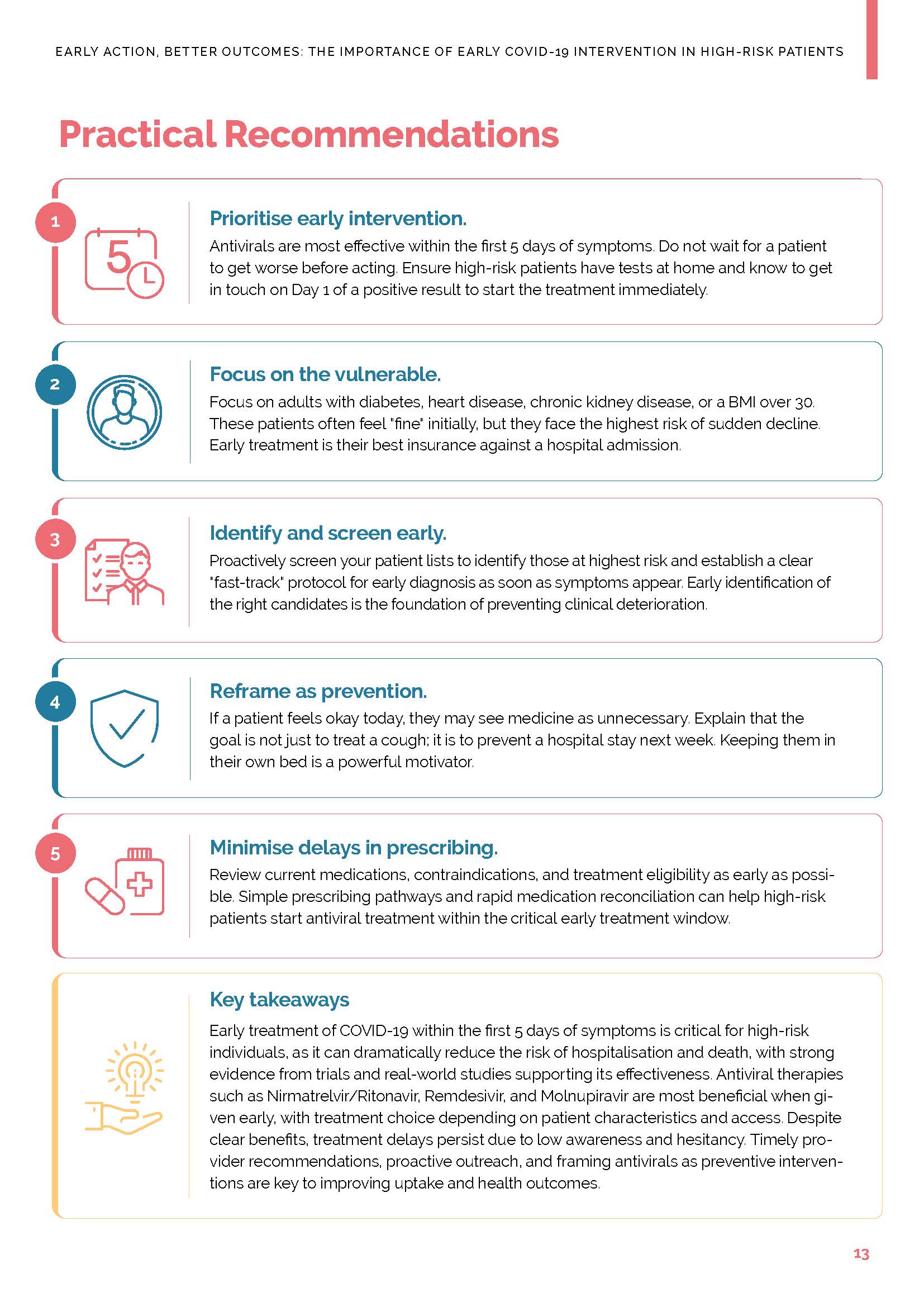
Early treatment of COVID-19 within the first 5 days of symptoms is critical for high-risk individuals, as it can dramatically reduce the risk of hospitalisation and death, with strong evidence from trials and real-world studies supporting its effectiveness. Antiviral therapies such as Nirmatrelvir/Ritonavir, Remdesivir, and Molnupiravir are most beneficial when given early, with treatment choice depending on patient characteristics and access. Despite clear benefits, treatment delays persist due to low awareness and hesitancy. Timely provider recommendations, proactive outreach, and framing antivirals as preventive interventions are key to improving uptake and health outcomes.
Practical recommendations
- Prioritise early intervention.
Antivirals are most effective within the first 5 days of symptoms. Do not wait for a patient to get worse before acting. Ensure high-risk patients have tests at home and know to get in touch on Day 1 of a positive result to start the treatment immediately.
- Focus on the vulnerable.
Focus on adults with diabetes, heart disease, chronic kidney disease, or a BMI over 30. These patients often feel “fine” initially, but they face the highest risk of sudden decline. Early treatment is their best insurance against a hospital admission.
- Identify and screen early.
Proactively screen your patient lists to identify those at highest risk and establish a clear “fast-track” protocol for early diagnosis as soon as symptoms appear. Early identification of the right candidates is the foundation of preventing clinical deterioration.
- Reframe as prevention.
If a patient feels okay today, they may see medicine as unnecessary. Explain that the goal is not just to treat a cough; it is to prevent a hospital stay next week. Keeping them in their own bed is a powerful motivator.
- Minimise delays in prescribing.
Review current medications, contraindications, and treatment eligibility as early as possible. Simple prescribing pathways and rapid medication reconciliation can help high-risk patients start antiviral treatment within the critical early treatment window.